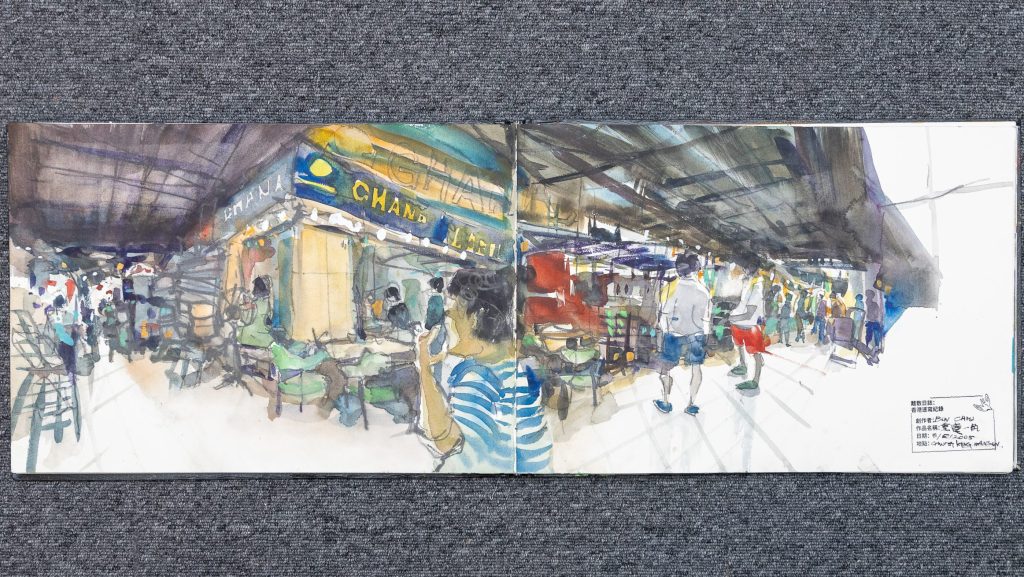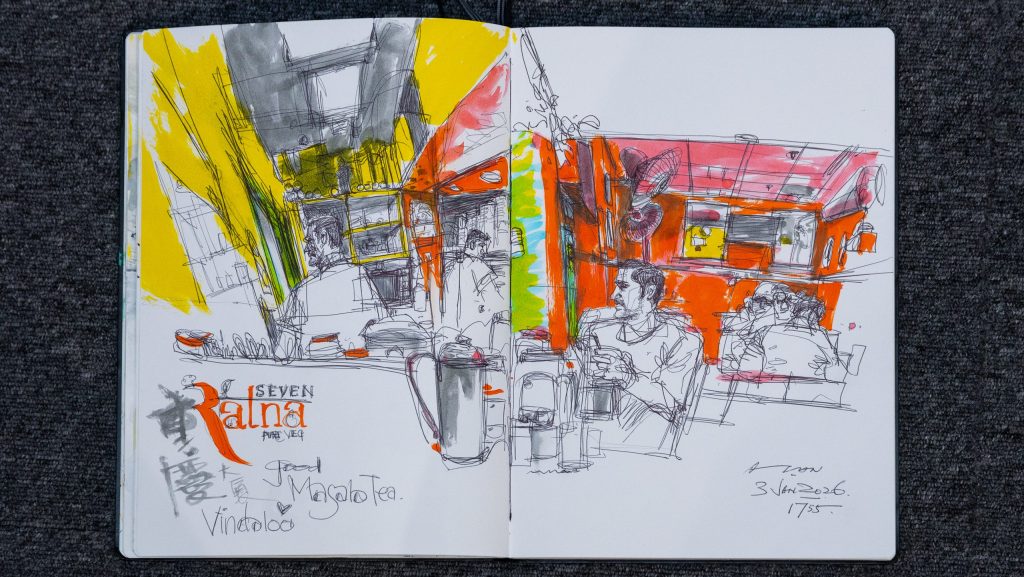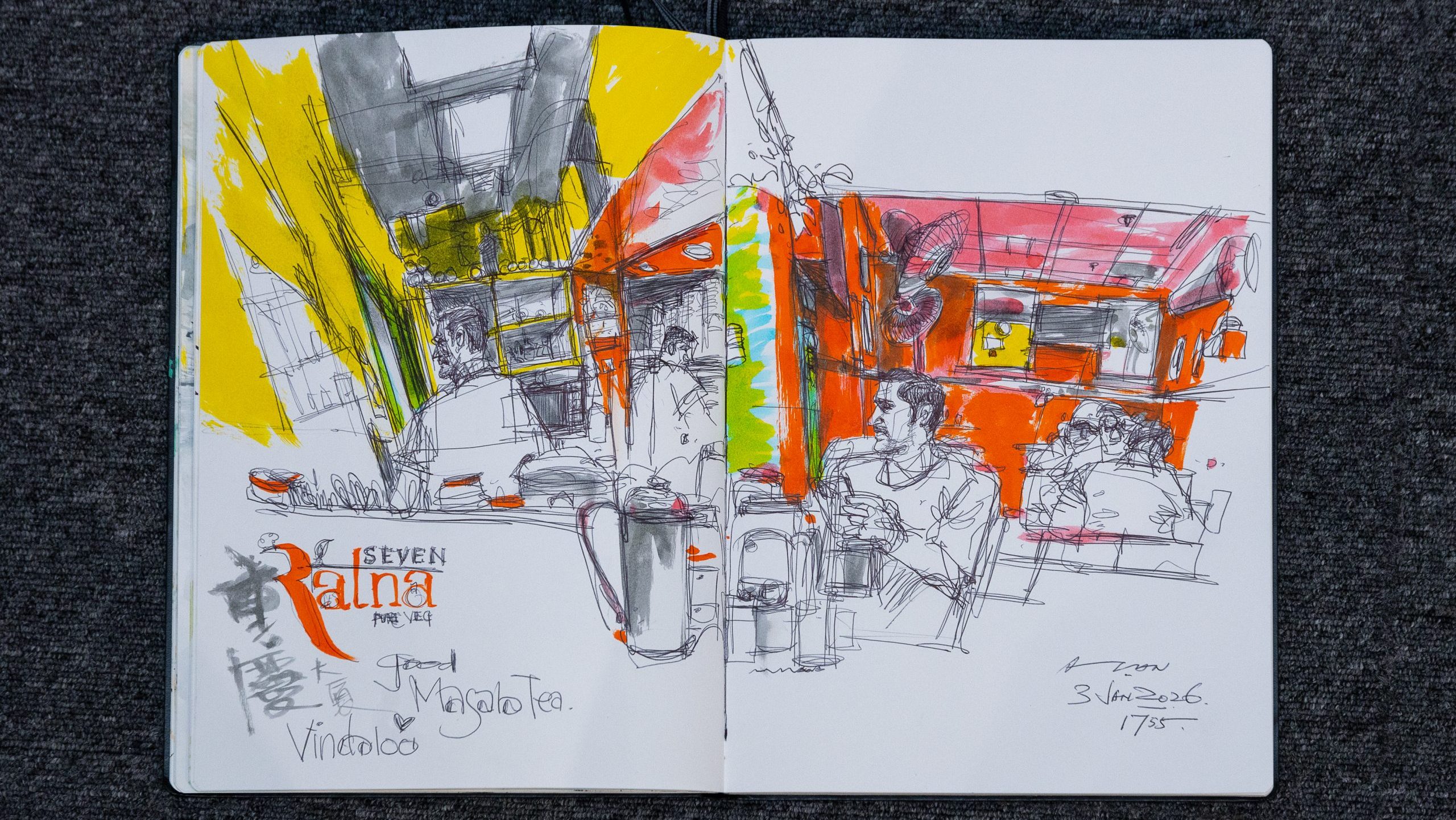
“Chungking Mansions is a massive marketplace. You can find absolutely everything here, and it draws people from every corner of the world.”
Sah hails from Lahan, a town in south-eastern Nepal near Janakpur—the birthplace of the Hindu goddess Sita. He moved to Hong Kong in 2003 to work as a chef. For Sah, Hong Kong’s respect for human rights, its world-class business environment, and its high level of safety were the key factors in his decision to relocate. Today, he calls the city home along with his wife and three children. Early on, he observed that Hong Kongers dine out frequently and rarely cook at home; seeing the immense potential in the food and beverage industry, he set his heart on building a career in catering.
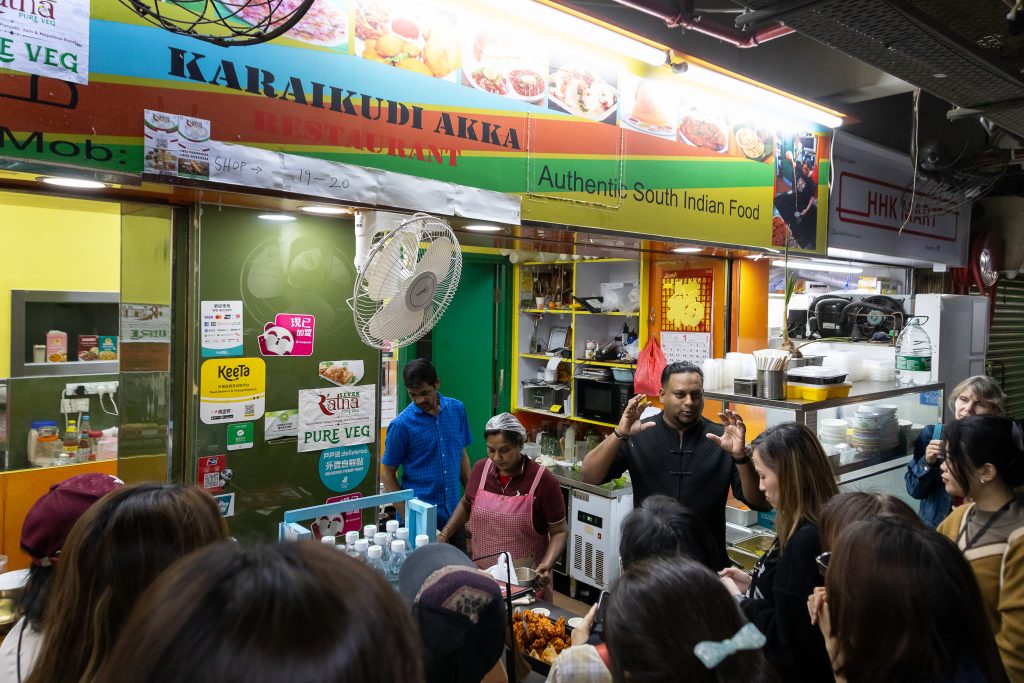
Last year, Sah and his wife took over an Indian restaurant on the ground floor of Chungking Mansions and renamed it Seven Ralna Pure Veg. The “Seven” in the name represents the seven colours commonly found in Indian cuisine: red (tomato), orange (carrot), yellow (dal/lentils), green (spinach), white (yogurt or paneer), brown (chapati), and purple (beetroot). Symbolically, the number seven also holds sacred and auspicious meaning in Indian religion and culture. “Ralna” is the name of Sah’s wife, and it also carries the meaning of “blending” or “fusion”.
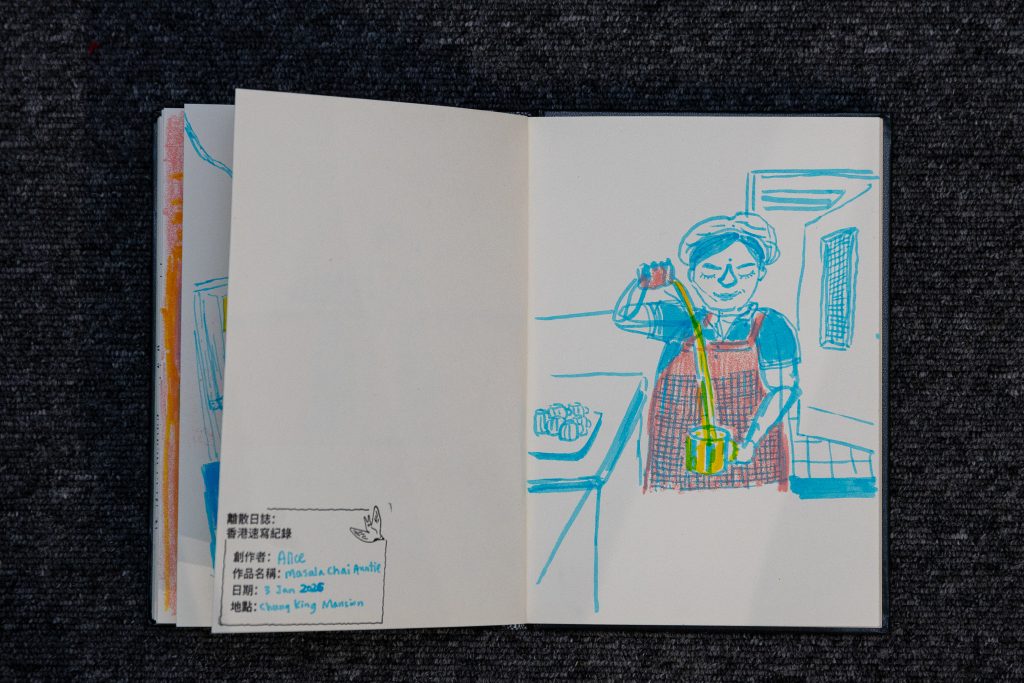
When the couple first took over, the restaurant focused exclusively on South Indian cuisine and was struggling to stay afloat. Sah and his wife turned things around by significantly expanding the menu, adding North Indian dishes alongside Nepalese, Pakistani, and Bangladeshi options. This diversification successfully broadened their customer base. “The restaurant is doing very well now!” Sah says with pride. “We offer made-to-order items like various Indian breads—naan, parotta, and dosa—because customers love freshly prepared food. But we also have semi-prepared options to satisfy the demand for a quick meal for those in a hurry.” While the restaurant does attract some local Chinese diners, the majority of the clientele remains Indian. “Local Chinese people might eat Indian food once or twice a week, but they won’t eat it every day. It’s an occasional treat for them, as they find the flavours quite heavy,” Sah explains frankly.
The restaurant offers both vegetarian and non-vegetarian menus to cater to all preferences. Four years ago, Sah followed his parents’ lead and became a vegetarian to improve his health; since then, his physical ailments have vanished. “Eating vegetarian is good for your health; it’s wonderful for your body and has so many benefits,” he says, drawing from his own experience. He is a passionate advocate for the lifestyle and frequently encourages his customers to give vegetarianism a try.
Sah’s elder brother moved to Hong Kong in the late 1990s to run a shop in Chungking Mansions. Sah used to visit him often and vividly remembers how bustling the building was back then, especially the rows upon rows of electronics shops. To Sah, Chungking Mansions is essentially a massive “marketplace”. He says: “Chungking Mansions is a place for business, full of opportunity. You can find absolutely everything here—food, groceries, clothing, electronics, guesthouses—it has it all. At the same time, because it draws people from every corner of the world, the competition is fierce. That is what makes Chungking Mansions a true hub of trade.”
Interviewed by K. Hang Wong
Cover Image: by Alan Cheung