“Chungking Mansions is always changing.”
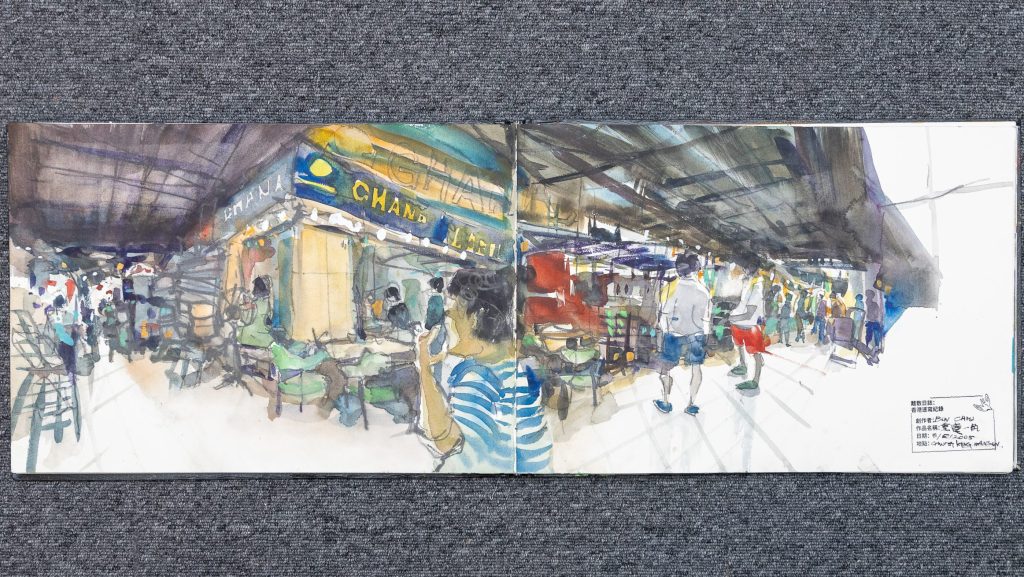
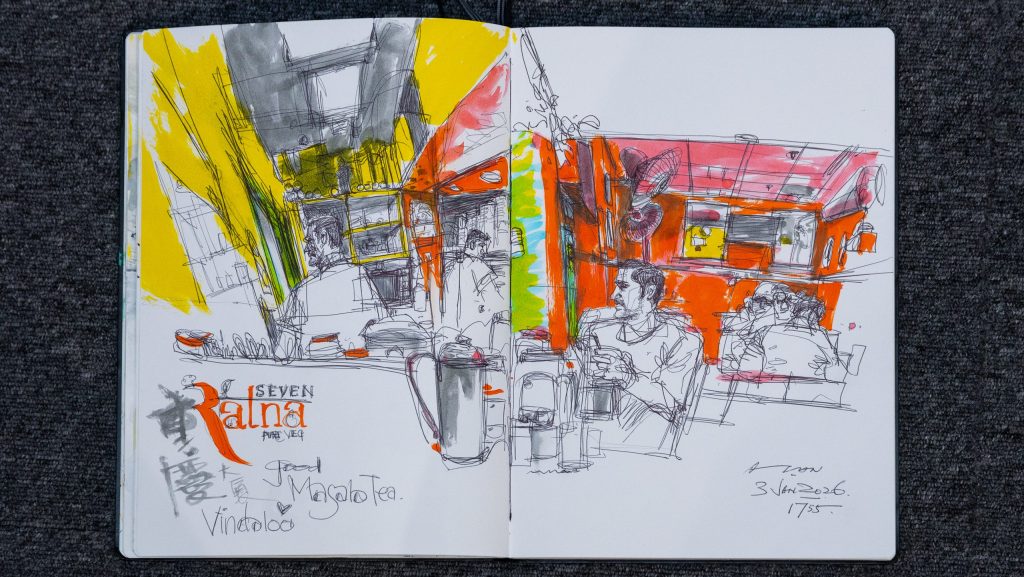
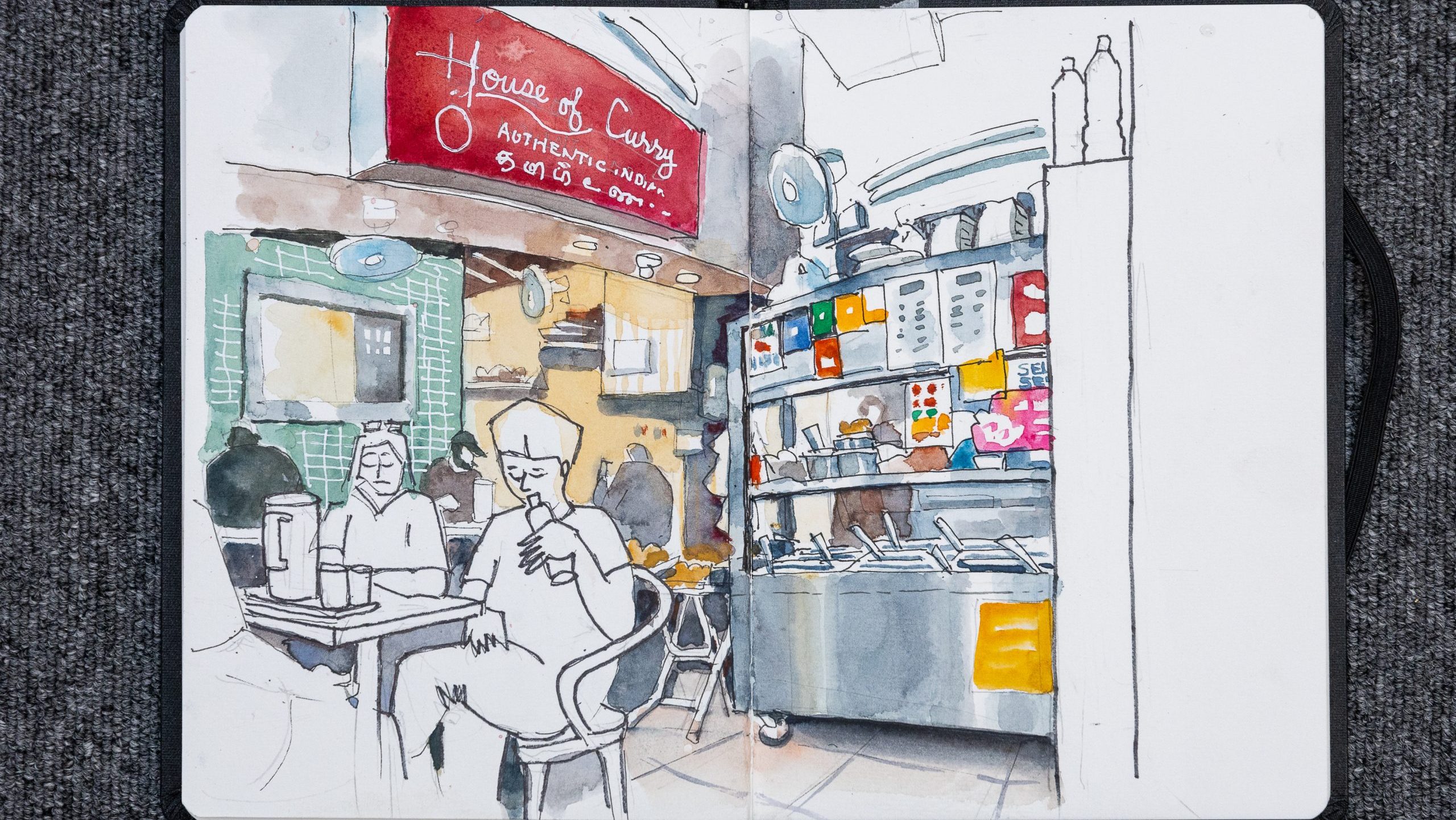
Two and a half years ago, Jawad took over House of Curry, an Indian eatery on the ground floor of Chungking Mansions. The shop is modest, with only a few tables and no doors or windows to separate it from the corridor. It opens directly onto the main thoroughfare, where a steady stream of customers mirrors the frantic, bustling pace of the building itself.
Before taking over the eatery, Jawad was like any other customer. He would stop by once or twice a week for a quick cup of milk tea or a dosa (a South Indian crepe). Nowadays, he is a much more frequent fixture, often sitting for hours at a time, buried in his work as he remotely manages his watch business. He laughs, admitting that watches are his true trade; at the eatery, he is simply the person in charge of the accounts. While he spends most of his time stationed there, he leaves the daily operations to his partner. He cherishes the familiar atmosphere of the place and knows most of his customers by name. One regular, who works in Jordan, has been a loyal patron for a decade—following the eatery from its original location elsewhere in the building to its current spot. For him, the shop is a vital gathering place for friends and compatriots. Another regular, Sam, who runs a trading business upstairs and hails from Chennai, the capital of Tamil Nadu, visits specifically for the tea’s rich ginger aroma. Even though Jawad doesn’t step into the kitchen himself, he finds great joy in serving his own community.
House of Curry specialises in South Indian cuisine, where rice is the staple—dosas, for example, are made from fermented rice batter. This contrasts with Northern Indian cuisine, which relies more on wheat and barley; consequently, Southern dishes tend to feel much lighter. Jawad explains that South Indian flavours can be further distinguished by the traditions of three major states: Tamil Nadu, Andhra Pradesh, and Kerala. The eatery follows the culinary style of Tamil Nadu, which is where Jawad himself is from.
Jawad’s father lived in Hong Kong during the 80s and 90s, running a currency exchange shop. After finishing his studies in India, Jawad moved to Hong Kong in 2007. As a child, he spent his school holidays visiting his father, and those early trips always included visits to Chungking Mansions. He recalls that back in the 80s and 90s, the building wasn’t as filled with restaurants as it is today; instead, it was a kingdom of electronics retail. He remembers buying torches, game consoles, and alarm clocks here. He points to the electronics shop next door, noting that it has stood its ground for over forty years.
“Chungking Mansions is always changing,” Jawad says. The building isn’t a static image from his childhood memories; instead, he can trace the evolution of its commerce over the decades. In the early 2000s, currency exchange shops were everywhere, mostly owned by Indians. Then came the mobile phone boom, where a massive trade flourished, exporting phones from China to Africa via Chungking Mansions. That era eventually faded when manufacturers began exporting directly from China, leading to the decline of the building’s phone trade.
Turning back to his own eatery, Jawad admits to some anxiety. Although the move to the current location brought better foot traffic, business hasn’t quite met his expectations. Since the pandemic, tourist numbers have struggled to return to their former levels. Consequently, the eatery has lost many of its Southeast Asian travellers and now focuses primarily on serving the local Indian community in Hong Kong, providing affordable dining options within the building.
As a businessman, Jawad speaks fluently about the successive waves of commercial trends that have defined Chungking Mansions. In doing so, he has become a witness to the rise and fall of various eras within these walls.

Interviewed by K. Hang Wong
Cover Image: House of Curry by Eva Sze
©️ 2026 Heritage Cultures Ltd. All rights reserved. Do not reproduce without permission.