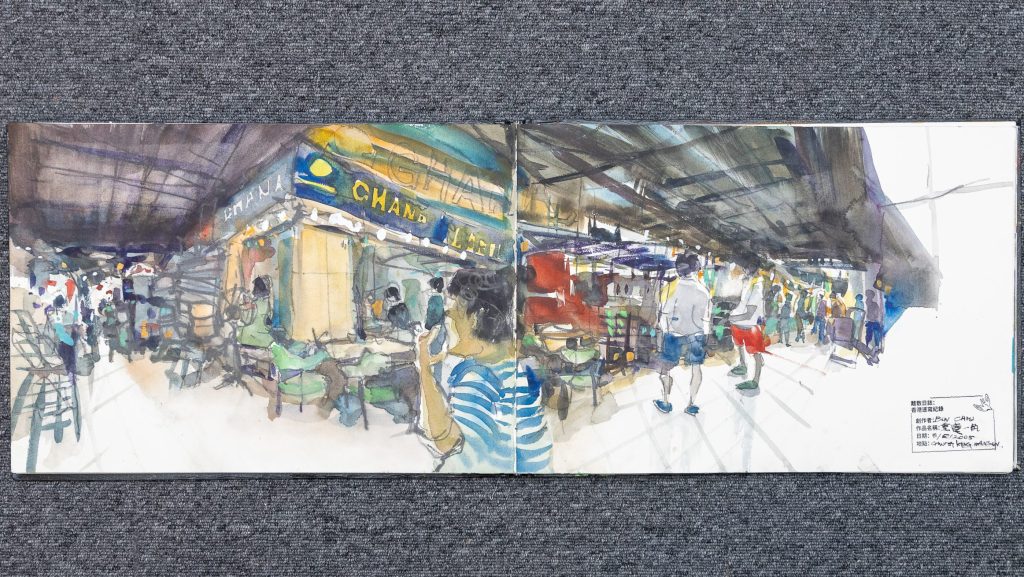
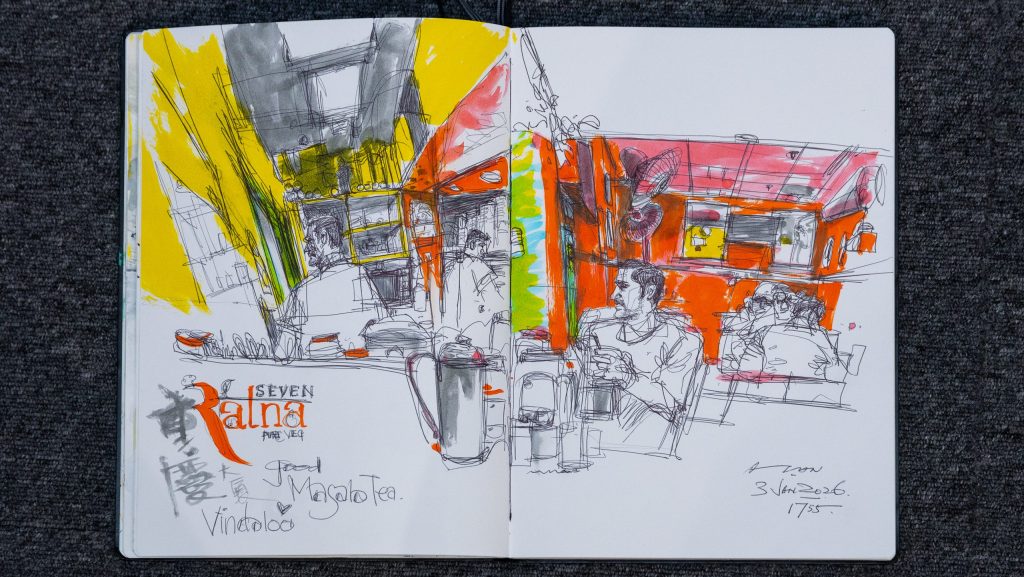
“We have been open since 1974; I must protect their brand and keep it running.”
Inside this grocery store, the variety of goods is dazzling, with well over a hundred different items on the shelves. If you ask where a specific spice is kept, one man can point it out almost instantly without a second thought; he can even describe its flavour and usage in meticulous detail. It’s no surprise, as Kulbir has spent over 30 years learning the ropes at New Delhi Store—a local institution that has stood firm in Chungking Mansions for half a century.
New Delhi Store was founded in 1974 by Kulbir’s father-in-law and his brothers. At the time, there were only a handful of Indian grocery stores in Hong Kong—two in Tsim Sha Tsui and one in Wan Chai—and they were among the pioneers. Originally located around Kimberley Road, they sold Indian sundries like perfume, toothbrushes, and butter. Two years later, upon the completion of Chungking Mansions, the shop moved in and has remained rooted there ever since.
In the 90s, Kulbir followed his wife from India to Hong Kong. His very first job after graduating from university began right here.
“Everything started from the bottom.” There were no special privileges; he had to do everything himself. Kulbir recalls how difficult and high-pressured the work was in the beginning. He worked 12-hour shifts from nine to nine every day. Being new to the city and unfamiliar with the streets, he had to rely on map books or ask passers-by for directions, often hauling heavy goods up four or five flights of stairs. “It was very hard. Not only were the goods heavy, but there wasn’t just one order—there were over ten. I spent the whole day constantly out on deliveries.” Yet, through this, he gradually learned to navigate the geography of Hong Kong. “That was the first thing I learned,” Kulbir says with pride.
Beyond the manual labour outside, he also had to manage the shop’s internal affairs, which proved to be another challenge entirely. “The first step was to remember the prices of all the goods.” He recalls that in those days, there were no computers or even calculators to help; every price had to be committed to memory. Occasionally, a customer would bring an item to him and he would momentarily blank on the price, forced to seek help from colleagues. “That’s really challenging. It was confusing at first, but this is a family business, I have to do it, so I learned as I went.” He describes it like learning to walk: “As you keep walking, you naturally learn how to do it.”


With this mindset and the encouragement of his father-in-law and uncles, Kulbir became increasingly proficient. He mastered everything from individual prices to the subtle differences in quality between various brands. He even personally tasted the different spices to learn how to distinguish their grades, ensuring he could provide accurate recommendations to his customers.
Reflecting on his journey, Kulbir admits that during his first ten years in Hong Kong—especially during major festivals—he felt deeply homesick. When asked how he coped, he says frankly that there was no magic cure: “Sit at the corner, cry sometimes.” Letting his emotions out and going home for a good night’s sleep was the best remedy. “Once you decide to stay, you have to accept everything, the good and the bad. You have to make trade-offs; you have to accept it.” He emphasises that mindset is everything—once you know your goal, you must keep moving forward.
Fast forward thirty years, and Kulbir now jokingly claims that if he goes on holiday for more than 15 days, he starts missing Hong Kong food. “Yeung Chow fried rice, scrambled eggs with shrimp, and shrimp dumplings and siu mai are my favourites.” He notes that as he built his own social circle and watched his children grow into adults, Hong Kong became his home.
Kulbir has transformed from a young man in his 20s into a leader. Occasionally, when he sees new Indian staff arriving in Hong Kong, he is reminded of his younger self and tries to teach and help them. “But not everyone wants to learn; some people leave after just a month.” Although technology has advanced and he can now rely on computers and machinery, he believes that negotiating and communicating with suppliers remains a lifelong lesson. He laughs, saying he is still learning today: “You have to have the heart for it; there’s never really an ‘off’ time.” Even when he travelled to the UK for his daughter’s wedding, he was constantly checking messages, worrying about the shop. “I’ve done this for 35 years; this is my daily life.”
Indeed, starting a business is hard, but sustaining one is harder. Since his father-in-law and uncle passed away, the heavy responsibility of managing the shop has fallen to Kulbir, bringing an inevitable sense of pressure. “It’s a big responsibility on my shoulders, I can’t let the business down.” From the beginning, Kulbir has humbly maintained that he didn’t simply “take over” the shop; he views himself as an employee looking after the business on behalf of his elders.
Regardless of titles, Kulbir continues to watch over the shop every day, tending to every detail. “We have been open since 1974; I must protect their brand and keep it running.” Regarding the future, he says it remains unknown for now, but as he puts it: “As you keep walking, you naturally learn how to do it.”

Interviewed by Carly Chan
Cover Image: Bon
©️ 2026 Heritage Cultures Ltd. All rights reserved. Do not reproduce without permission.