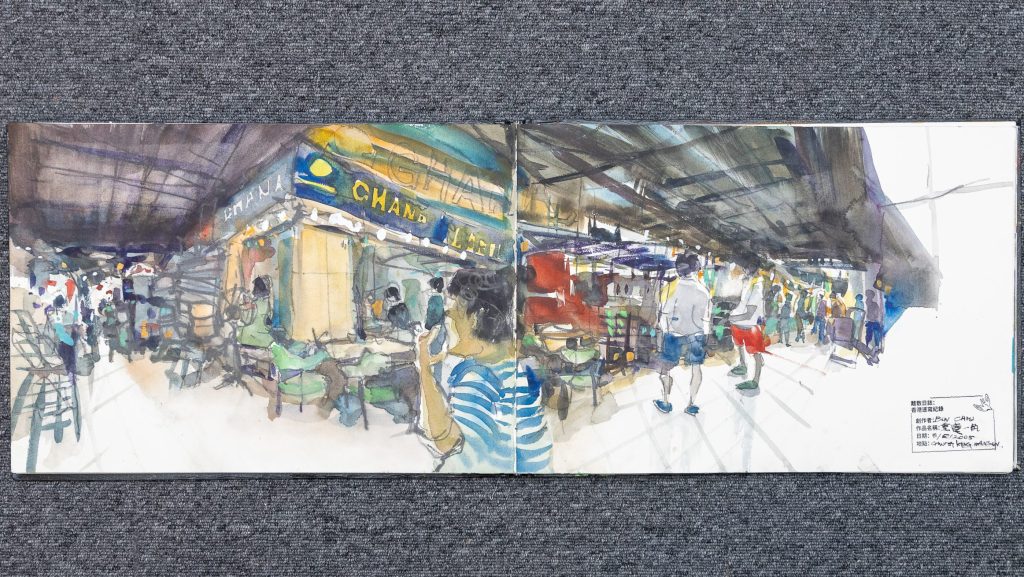
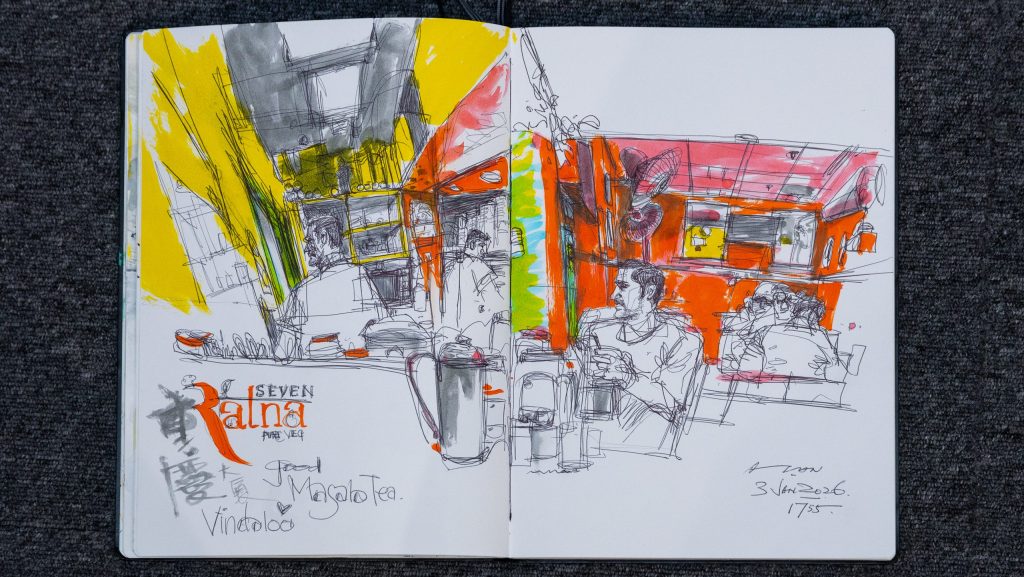
It’s been eight years since Oshi moved from Lucknow, India to Hong Kong in 2016. She is now studying Computer Science at the University of Hong Kong. While Oshi struggled to adapt to the local food culture, communication styles, and language, how did she finally come to truly embrace her life in Hong Kong?
Oshi moved to Hong Kong because of family reasons, whose work was based here, when she was in high school. At first, she had a hard time adjusting to the local cuisine. Oshi and her family were vegetarians, but it was difficult for them to find vegetarian restaurants in Hong Kong. In the first week, they only ate bread and butter. Oshi also struggled to get used to vegetarian Chinese food. Although Cha Chaan Teng (Hong-Kong style cafe) and high-end restaurants provided distinctive flavours, she missed the easily accessible street food in India. However, Oshi thinks that in recent years, Westerners have brought vegetarian culture to Hong Kong, making it more popular. Hence, there is now a more diverse range of vegetarian restaurants in Hong Kong to fulfill her dietary requirements.

Oshi had to communicate with locals after she had settled in Hong Kong, but language barrier was a major issue. Everyone around her spoke Cantonese, which made it hard for her to join conversations. Meanwhile, she was also worried about being too enthusiastic – while Indian culture is very welcoming, Hong Kong people tend to be more reserved. Oshi started to doubt herself when new friends were reluctant to open up right away. But as she encountered more locals, she became less fearful and realised that there was no need to feel awkward. She learned that cultural differences do not necessarily lead to conflicts. She also appreciated that Hong Kong people value privacy, which in turn made her feel safer and more secure. She learned to respect others’ personal space and understood the importance of embracing differences.
Despite the cultural differences, Oshi has discovered the unique charm of Hong Kong. She appreciated the diverse learning environment and decided to pick up a guitar. She also acknowledges that Hong Kong possesses the best fintech industry in Asia, making it an ideal place for career development. Moreover, Oshi is delighted to see Indian cultures, like the Holi festival becoming more popular in Hong Kong, which allows her to have a taste of home in a foreign land. She also shared her experience at Tai Kwun, Central, where the British colonial architecture reminded her of Kolkata, India, and the similar colonial history they share. This fostered a sense of connection between her hometown and Hong Kong.

Having lived in Hong Kong for eight years, Oshi has found her place in the city and is proud of her Indian identity. In the interview, Oshi proudly told us, “Many people stereotype Indians as being good at academics and majoring in computer science.” However, Oshi doesn’t mind the stereotype, as she and her parents are all proud of her achievements and hard work. But Oshi jokingly added, “Not all Indians are like me, though.” To disregard others’ expectations, adapt to new environments, and preserve her hometown’s culture may be Oshi’s current answer to navigating her life. Nevertheless, Oshi will continue to search for new answers and find a content way of living.