“Whatever happens, as long as I can help more people understand Ghanaian and African culture, I believe it is worth continuing.”
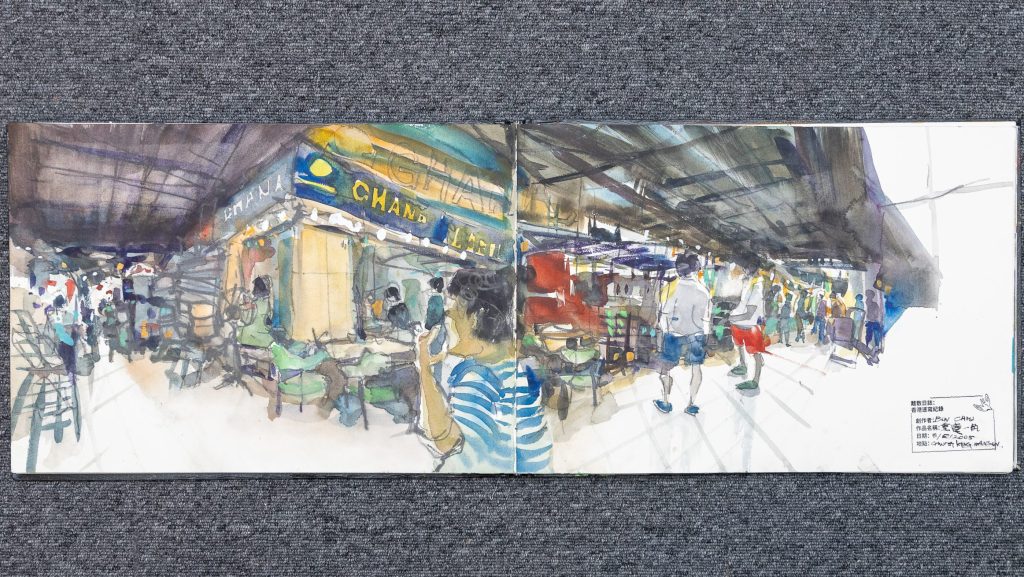
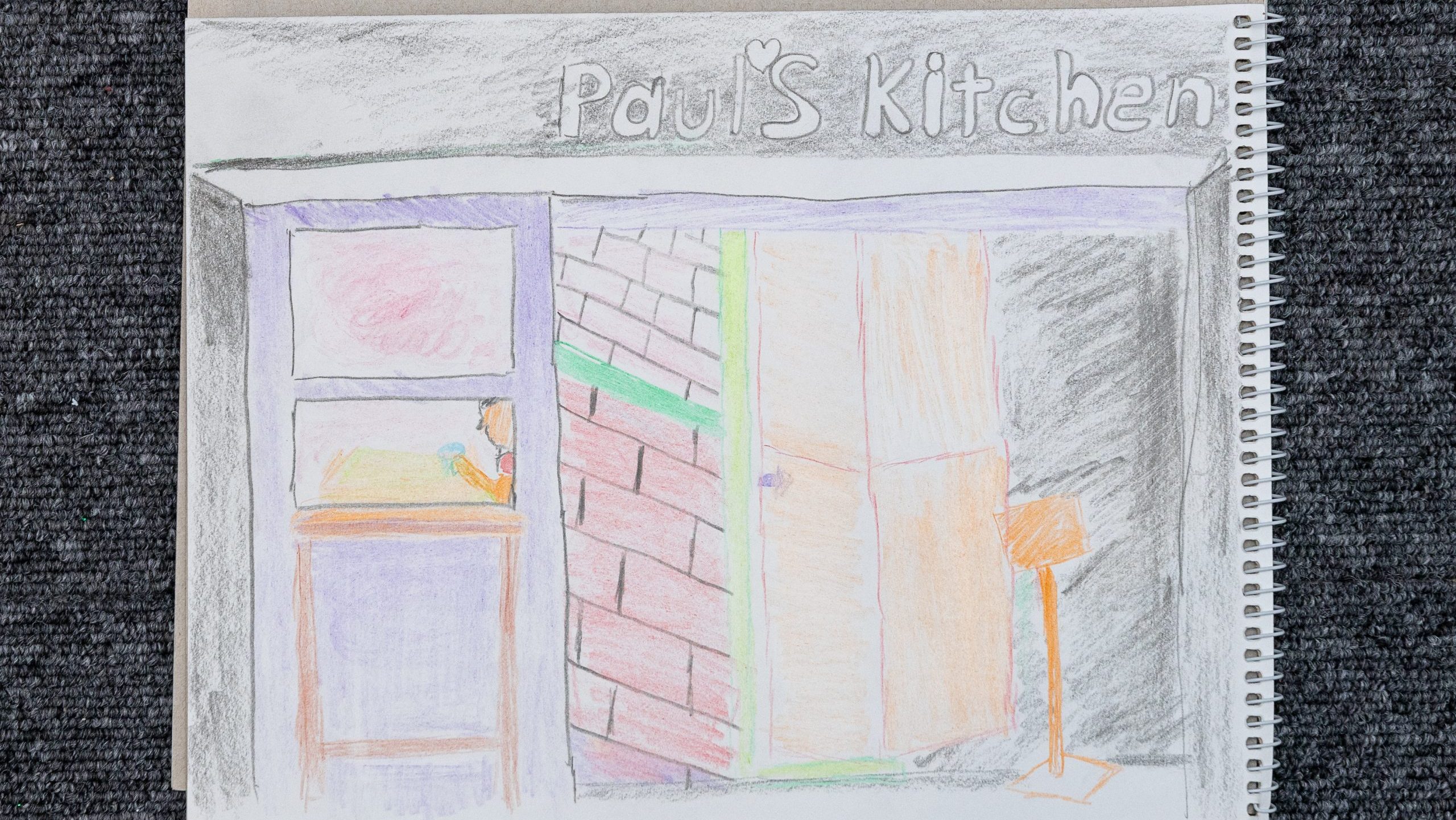
“Right from the start, there was no doubt in my mind; I knew I had to open the shop here. To the African community, Chungking Mansions is the landmark of Hong Kong,” Selina recalls. Ten years ago, she and her husband Paul, who hailed from Ghana, chose this spot for their restaurant, Paul’s Kitchen. Fast forward to today, and the restaurant is celebrating its tenth anniversary. While locals might rarely venture inside, for the African community in Hong Kong, Chungking Mansions is what World-Wide House is to Filipinos—a quintessential landmark and a must-visit destination. Whenever they want to catch up with compatriots or savour a taste of home, it is the first place that comes to mind.
From the 1990s through to the 2010s, a vast number of sub-Saharan African merchants travelled thousands of miles to Chungking Mansions. They came to buy second-hand or “knock-off” mobile phones from Chinese or South Asian vendors to resell back home, creating a retail economic chain connecting China, Hong Kong, and Africa. Due to its geographical and economic advantages, the building became a hub for this transnational low-end trade. During this era of frequent trade, Paul was one of those merchants. One day, while working in Guangzhou, he happened to ask Selina for directions on the street. That chance encounter led him to follow her to Hong Kong, and he never imagined he would spend the rest of his life here.
Cultural Differences: The Ghanaian Spirit
Ten years ago, the restaurant occupied just a single unit, serving Ghanaian and African fast food to merchants staying in the guesthouses upstairs and providing a gathering spot for African friends to watch football, drink, and chat. Back then, most of the clientele was African. During the pandemic, they rented the adjacent unit to expand, pivoting to offer takeaways tailored to local tastes. Today, they have even taken over a third unit opposite the original, transforming into a Hong Kong-African fusion restaurant where the majority of the customers are local, with the remaining being Japanese or other nationalities. The couple worked side-by-side to grow the business from one unit to three, but was it all smooth sailing? Not quite.
“My husband was very fierce—really fierce. Just ask the staff and they’ll tell you,” Selina says with a resigned smile. She explains that Ghanaians are big-hearted and expressive; they find great joy in life’s small pleasures, and when friends gather, they fill the corridors with vibrant laughter. However, they are also fiercely protective of what they believe in. When they first opened, they had to borrow water from a neighbouring shop. Soon after, that shop demanded an increase in the water fee. Selina wanted to pay just to settle the matter, but Paul insisted they provide a water bill as proof to protect their rights. Selina sees their personalities as poles apart—she is gentle and romantic, while he is practical and tough. “I wasn’t used to how loudly he spoke at first; I always thought he was scolding people.” Though she was intimidated initially, she eventually realised this was simply his standard for quality. She learned to compromise and collaborate, understanding that in marriage, as in business, you must accept every part of your partner to go the distance.
The restaurant’s current fusion menu is the hard-won fruit of many discussions—and many arguments. Customers often joke that they can almost sense the “sparks flying” just by looking at the menu. For instance, the signature Braised Oxtail was a point of contention. Selina was confident her recipe would be a hit, but because it required days of slow-cooking and preparation, Paul felt the cost was too high. They reached a deadlock until Selina proposed a business-like solution: if the dish didn’t perform well within three months, they would take it off the menu. Although it was briefly removed at one point, it eventually made a name for itself and became the signature dish of Paul’s Kitchen.


Rejection and Interaction: Hong Kong-African Culture
When they first pivoted to fusion cuisine, Paul surprisingly refused to include any Ghanaian elements because of the discrimination he had faced in Hong Kong. Selina believed that for the fusion concept to work, it had to have an African soul; otherwise, it would be just another Western restaurant and fail to retain customers. Paul, however, was convinced that no one in Hong Kong would like it. “I could understand it. He had faced discrimination his whole life; he couldn’t imagine that Hong Kongers would be interested in Ghanaian food.” Thanks to Selina’s persistence, the dishes now use authentic Ghanaian ingredients. Their signature “Grandma’s Sauce” is handmade by Paul’s mother and flown in from Ghana. “We can’t use a commercial manufacturer; if you can buy it anywhere, it’s just a substitute and the flavour is lost.”
While Paul’s Kitchen has successfully promoted African culture to locals, Selina notes that some people remain resistant or even refuse to enter Chungking Mansions. Some customers book a table over the phone but turn away the moment they reach the building’s entrance. Others sit down only to remark, “There’s nothing here for me to eat,” or “How can they charge so much in Chungking Mansions?” She recalls a son who reserved a table for Mother’s Day; when his mother arrived and realised where the restaurant was, she was visibly displeased and even rolled her eyes at Selina. Knowing that locals can be guarded, Selina promotes more “approachable” dishes and even offers to meet customers at the building entrance to escort them inside. “Actually, there are very beautiful, high-quality restaurants in Chungking Mansions. Anyone can come in, sit down, and enjoy a meal.” These are the extra efforts required when running a business in a place that feels like a foreign land within the city.
Fortunately, most customers appreciate their hard work, and many have become regulars over the years. One local customer, noticing the shop was tucked away and hard to find, even filmed a route guide and uploaded it to Instagram. Selina believes their loyal following is partly due to the unique location. Management in Chungking Mansions is relatively relaxed; if regulars are deep in conversation, they can stay open a bit later. Since the shop is tucked into a corner on the second floor, Selina can decorate it with seasonal flowers and her own photos of Ghanaian landscapes without bothering anyone, creating a little sanctuary for herself and her guests.
Continuing the Legacy after Paul’s Passing
Tragically, Paul passed away from an illness two years ago. Selina now runs the restaurant alone, carrying on her husband’s legacy with the same hands-on dedication. “Many people thought the restaurant would close, but this is the life’s work of my husband and me. I will definitely keep working hard to keep it going.” Today, Paul’s Kitchen has expanded beyond the walls of Chungking Mansions, providing catering for hundreds of people at banks and major corporations—a scale far larger than before. However, she notes that many members of the African community have left since the pandemic, leaving the future of Chungking Mansions uncertain. “Whatever happens, as long as I can help more people understand Ghanaian and African culture, I believe it is worth continuing.”


Interviewed by Hui Tsz Yuet
Cover Image: 重慶的非洲味道 by Stanley Chong
©️ 2026 Heritage Cultures Ltd. All rights reserved. Do not reproduce without permission.